
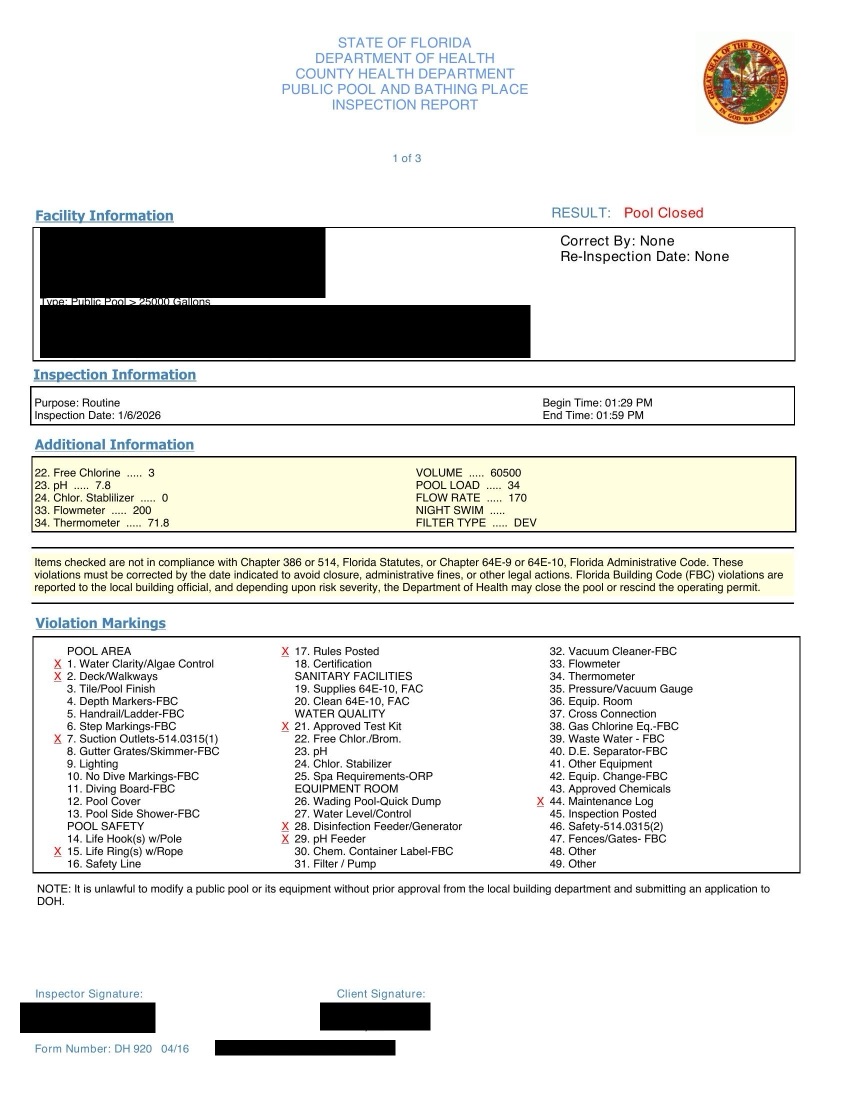
Immediate closure, not a warning
For serious violations — chlorine or pH badly out of range, a missing or damaged anti-entrapment drain cover, a broken self-latching gate — a Florida DOH inspector can order the pool closed on the spot. That means a physical closure notice and, in practice, roping off or locking the gate until it's resolved.
The citation and correction process
Less severe or non-immediate-risk violations get documented on a citation with a required correction timeline instead of an on-the-spot closure. Either way, you're now on record with an open violation until a re-inspection clears it — and repeat violations at the same property tend to draw closer scrutiny on future visits.
What it actually costs an HOA or property
Beyond any reinspection fee, the real cost is usually the downtime itself: a closed pool during peak season is a resident amenity complaint problem for a board, and for a hotel or rental property it's a guest-facing failure. There's also a liability angle — an incident at a pool with an open, known violation on record is a much harder position to defend than one with clean, documented service history.
How a documented service history changes this
Most failed inspections trace back to something that was drifting for a while, not a sudden failure — chemistry that wasn't being logged consistently, a drain cover that was already worn, signage that quietly went missing. A contracted service with per-visit chemistry logs and equipment checks catches most of this before an inspector does, and gives your board a real paper trail if anything is ever questioned.
If you're not sure where you stand right now
Our free DOH-ready inspection walks your pool and equipment room against the same categories a Florida DOH inspector checks, with a plain-language list of anything that needs attention — before it becomes a citation, not after.