
How-To
How to Clean Pool Coping with Chlorine
Real photos from a job we did this morning — here's exactly how we clean coping, not a generic internet method.
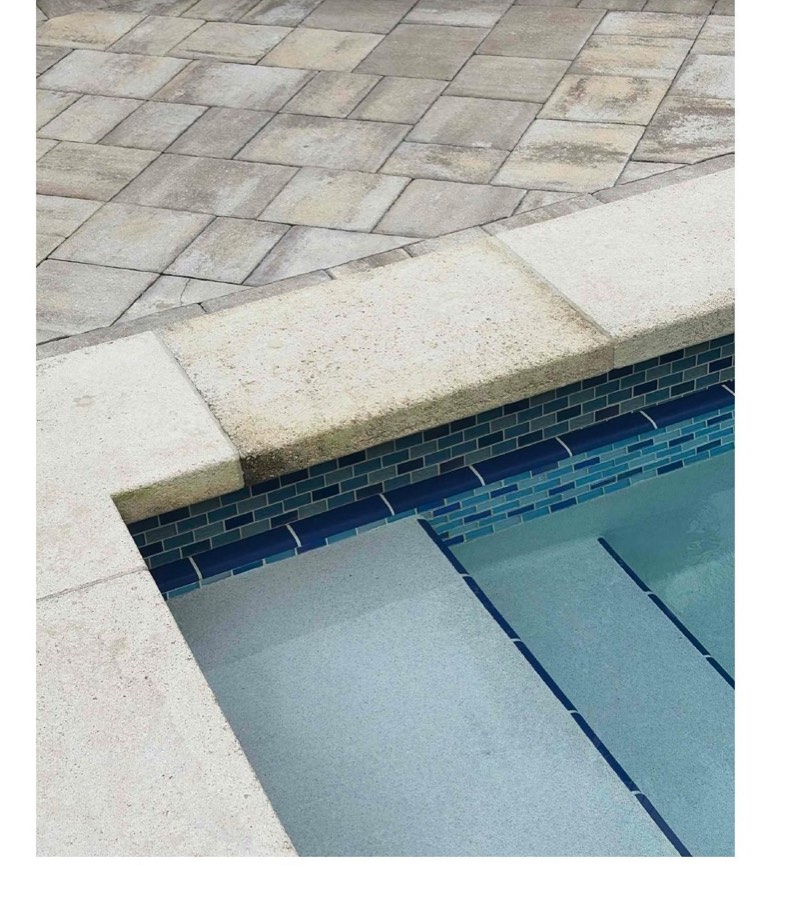
Coping staining on a community pool we service in Hollywood, FL — the same kind of dark buildup that shows up on shaded, humid coping across South Florida.
Why pool coping stains in the first place
Coping — the cap stone or paver running along the pool's edge — stays damp longer than the surrounding deck from splash-out and humidity, which makes it a perfect surface for algae, mildew, and organic buildup to take hold. Shaded areas, coping near landscaping, and anything under an overhang stain faster than coping that gets full sun. It's cosmetic, not structural, but on an HOA or commercial property it's usually the first thing a board member or resident actually notices.
What you'll need
- A pump sprayer — a basic 1–2 gallon garden pump sprayer from any hardware store works fine
- Liquid pool chlorine (sodium hypochlorite)
- Gloves and eye protection
- A hose for rinsing afterward
The method we actually use
This is the real process from a job we did this morning, not a generic internet method:
1. Mix the solution
Fill the pump sprayer mostly with liquid chlorine and top off the rest with water — on a 2-gallon sprayer, that's roughly 1.5 gallons of chlorine to 0.5 gallons of water. It's a strong, mostly-undiluted mix on purpose; this isn't a light chlorine-and-water spray, it's a real treatment.
2. Spray the coping
Walk the full perimeter of the pool (and spa, if it has one) spraying the solution directly onto the coping. For full coverage, treat all three surfaces — the inner edge facing the water, the top surface, and the outer edge facing the deck. It's easy to only spray the inner edge since that's what you see from the water side, but staining builds on all three, especially the top and backside where splash and rain sit longest.
3. Let it dwell
Give it about 5 minutes of dwell time before doing anything else. This is what actually breaks down the algae and organic staining — spraying and immediately rinsing doesn't give the chlorine time to work.
4. Walk it a second time
Do a second pass around the pool to check coverage and hit any spots that needed more. On a job with heavier staining, this is also when you'd spot-treat problem areas that need extra solution.
What this actually costs
This is the part that surprises people: at roughly 1.5 gallons of chlorine per treatment, a full pool-and-spa coping cleaning costs about the same as one jug of chlorine. It's one of the most cost-effective things you can do for how much it improves a pool deck's appearance — there's no special equipment or expensive chemical involved, just the right technique and enough dwell time.
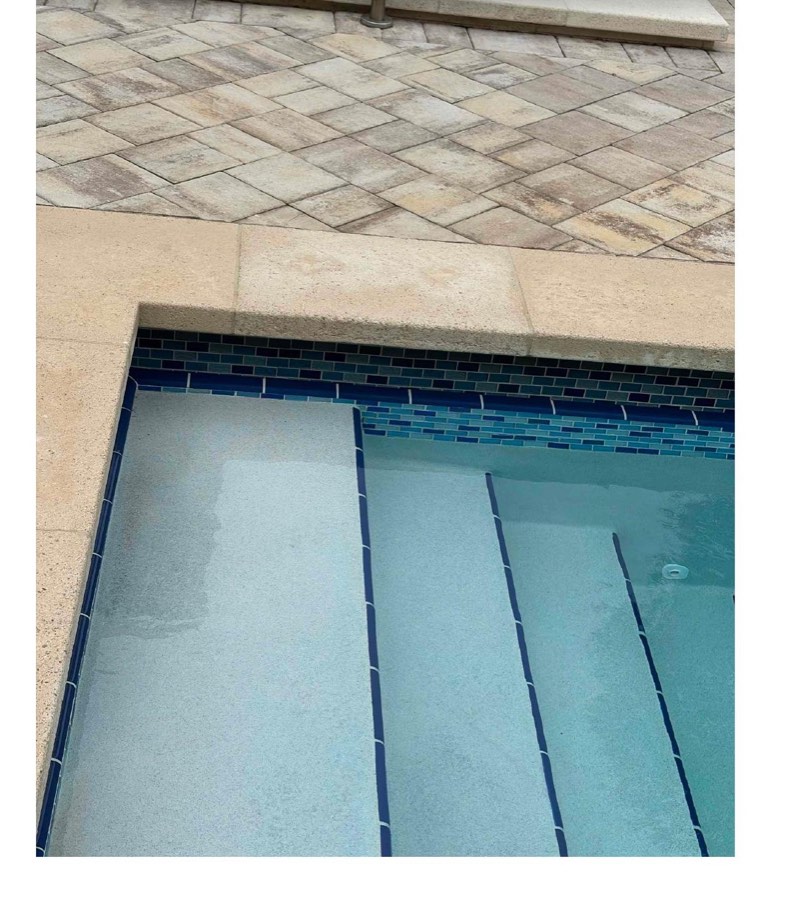
What chlorine cleans — and what it doesn't
Straight chlorine is excellent against organic staining: algae, mildew, and mold. It does not remove mineral or calcium scale buildup (the chalky white deposits common with hard water) — that needs an acid-based cleaner instead, which is a different job with different safety considerations. If your coping has white, crusty buildup rather than dark/green staining, chlorine alone won't fix it.
Safety notes
- Wear gloves and eye protection — this is a strong, mostly-undiluted chlorine solution, not a light spray
- Never mix chlorine with acid-based cleaners or products — the combination produces toxic gas
- Keep people and pets off the treated coping until it's been rinsed
- Rinse plants, grass, and landscaping if overspray reaches them — concentrated chlorine can damage vegetation
- Rinse the sprayer thoroughly after use
DIY vs. having your pool service handle it
The technique itself isn't complicated, which is exactly why a lot of properties try it themselves — but a mostly-undiluted chlorine solution sprayed at scale on a commercial property has real failure modes: overspray on landscaping, splash-back on metal railings or hardware, or getting it wrong on natural stone coping that needs gentler handling than concrete pavers. For a single small residential pool it's a reasonable DIY afternoon project. For an HOA or commercial property, it's usually more cost-effective to have it done as part of a regular service visit than to have a well-meaning volunteer improvise it. See our residential maintenance or commercial pool service pages for how this fits into routine visits.
Frequently asked questions
How often does coping need to be chemically cleaned?
It depends heavily on shade and humidity — a shaded, poorly-ventilated area might need it every few months, while coping in full sun can go a year or more. It's a good add-on to routine service rather than a fixed schedule.
Will this damage natural stone coping like travertine?
Straight chlorine is generally gentler on natural stone than acid-based cleaners, but any strong chemical should be tested on a small area first and not left to sit indefinitely. When in doubt on a natural stone deck, ask your pool service before applying anything at full strength.
Can I use pool shock instead of liquid chlorine?
Granular shock isn't practical for a sprayer since it needs to dissolve first — liquid chlorine (sodium hypochlorite) is the practical choice for this method.
Does overspray hurt the pool water?
A small amount of overspray into the pool isn't a real problem, but avoid spraying directly into the water in volume — it's an unnecessary chlorine spike, not a benefit.
Ready to talk about your property?
Tell us about your pool and we'll follow up with pricing — usually the same day.